


RECOVERY OF PRECIOUS METALS FROM INDUSTRIAL EFFLUENTS
The mining industry is one of the most important in the world. Its manufacturing processes consume vast amounts of water, thereby generating large volumes of wastewater or effluents. These effluents contain various chemicals, metals, and other pollutants that can have a significant environmental impact if not properly treated. Precious metals, frequently used in numerous applications, are notably found in effluents from this industry.
The recycling of precious metals such as nickel, gold, copper, cobalt, platinum, etc., is possible. However, traditional metallurgical methods for recovering these metals from effluents are costly and energy-intensive.
Techniques used for precious metals recovery
Ion exchange process
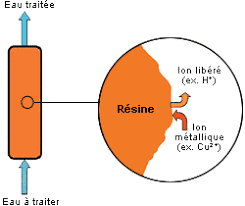
- This process uses an ion exchange resin to selectively adsorb the precious metals present in the effluent. The resin possesses functional groups capable of binding to metal ions and exchanging them for other ions present in the effluent. The adsorbed metals can then be eluted from the resin using a suitable eluent, and the resin can be regenerated for reuse.
| Advantages | Constraints |
|---|---|
|
|
Solvent extraction process
- This process consists of selectively extracting precious metals from the effluent using an organic solvent. The solvent is then separated from the aqueous phase, and the precious metals are recovered using a suitable stripping agent.
| Advantages | Constraints |
|---|---|
|
|
The ExoCell solution :
Dissolved Air Flotation Process – DAF
- This process consists of separating the metal in solid, undissolved form from the liquid phase within the effluent, through the addition of a large quantity of microbubbles of air (around ten micrometers in size). These microbubbles float and thicken the metallic precipitates or complexes, making them easy to recover at the surface.
- It is also possible to convert metal sulfides into a foam, which can be separated by flotation and subsequently treated to extract the precious metals.
- Flocculants can be used to further concentrate the metallic precipitates or complexes and increase separation efficiency.
| Advantages | Constraints |
|---|---|
|
|
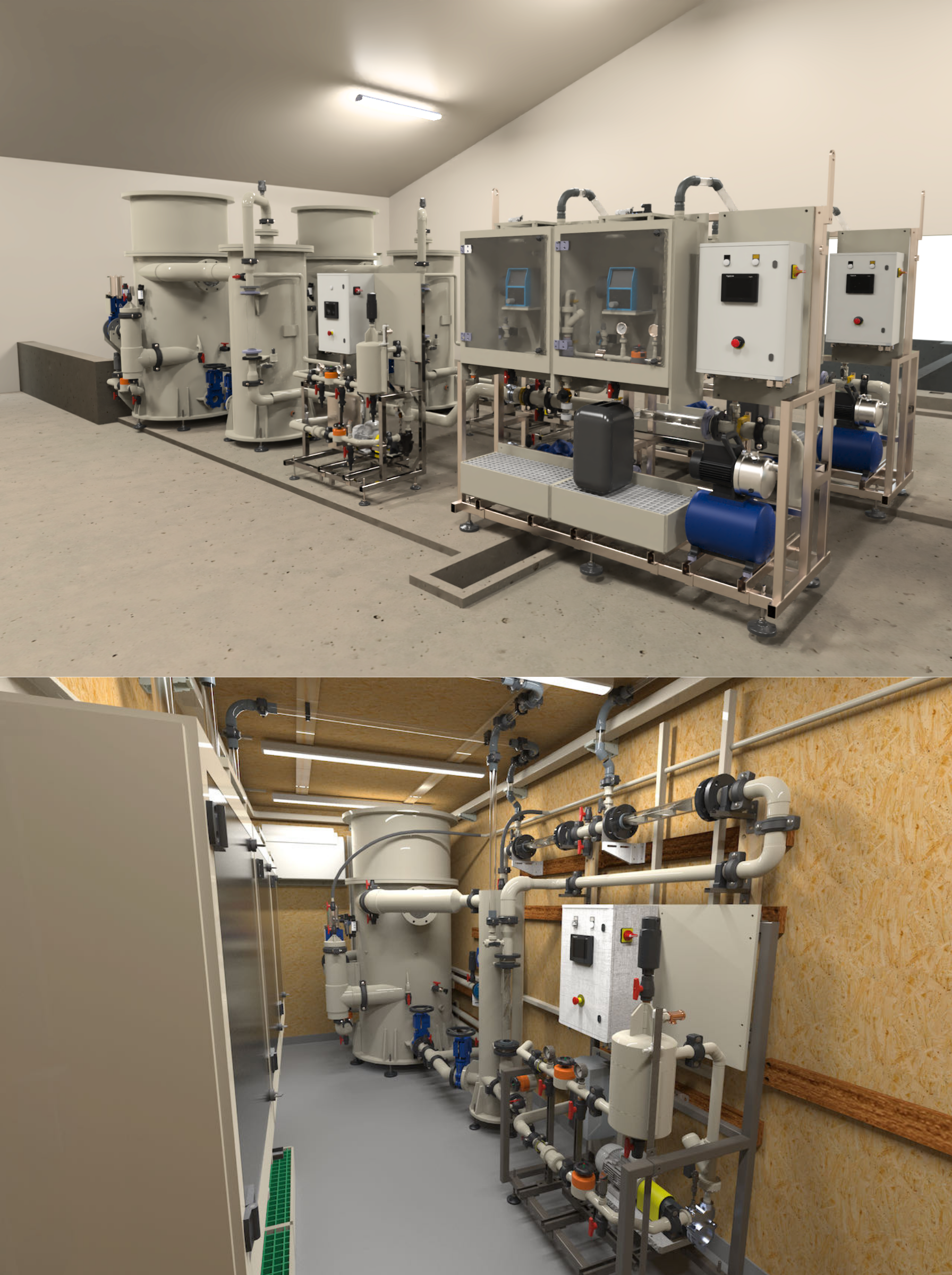
- ExoCell’s FloliBull® system is likely the best reagent-assisted dissolved air flotation system, perfectly suited for solid/liquid metal separation.
-
- We have developed the FloliBull® (DAF) and the NanoBull® (microbubble generator). Associated with the ReakCell® (injection of coagulant/flocculant/complexing agent/precipitant or co-foam), they enable the agglomeration of insolubilized substances and enhance metal capture.